As an Amazon Associate, I earn from qualifying purchases.
This commission changes nothing about the price you pay, and it doesn't influence my recommendations: I only list gear I consider reliable and suited to Quebec conditions. Always check the specifications and the price on the product page before buying.
1. Drinking water
7 items
1. Drinking water
The number one need: aim for at least 6 litres per person, 12 to be comfortable. How you store it matters as much as how much you have.

Collapsible water jug
Lies flat when empty, carries easily when full thanks to its handle, and its tap lets you pour one-handed. The simplest way to add several litres to your reserve without taking up space.
$31.95−6 %$29.95 View on Amazon
WaterBOB — bathtub reservoir
A 100-gallon food-grade bladder that unrolls into the bathtub and fills in about 20 minutes. When a storm is announced, you put more than 350 litres of clean water in reserve — without the problem of a bare tub, which gets dirty and drains slowly. Stores in a box the size of a book.
$69.99 View on Amazon
LifeStraw — personal filter
Your guarantee of drinkable water even once the reserve runs out. It filters up to 4,000 litres, needs no battery and no chemicals, and fits in a pocket. It's the first item I put in an evacuation bag.
$17.64 View on Amazon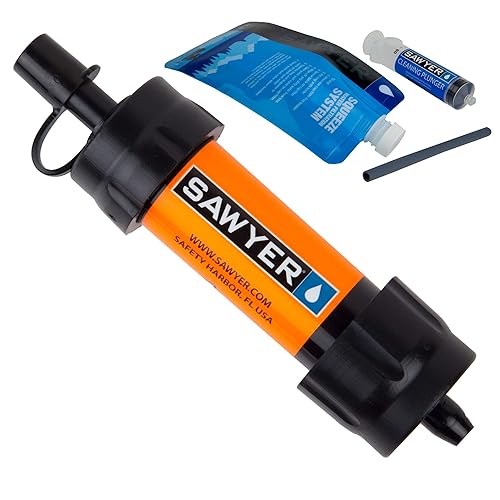
Sawyer Mini — screw-on filter
Its big advantage over other personal filters: it screws directly onto a standard water bottle. You fill the bottle, screw on the filter, and drink normally — instead of lying down at the edge of a stream to suck water through a straw. It also attaches to a hydration bladder.
$54.99−20 %$44.09 View on Amazon
Berkey — gravity purification
The system that makes a household truly self-sufficient: water passes by gravity through the filter elements, with no electricity, no pressure and no wear parts to replace often. This is the level 3 solution — the one that lets you treat water from a well, a lake or a stream for weeks at a time.
$419.99−11 %$374.85 View on Amazon
Aquatabs — purification tablets
The lightest and cheapest solution: one tablet per litre, and the water is drinkable in about 30 minutes. Canadian format, long shelf life. Keep them in the kit permanently — they take up no space and they almost never expire.
$20.69 View on Amazon
Stainless steel military canteen
A single-wall bottle sits straight on the coals to boil water — the purification method that still works when the filter is frozen or clogged. Definitely not a vacuum-insulated model: a double-wall bottle bursts on a fire. This one comes with a metal cup that doubles as a cooking pot.
$34.99 View on Amazon
2. Food
9 items
2. Food
A reserve built from food your family actually eats — and the means to cook it without electricity.

Heavy-duty manual can opener
The most common oversight in all of emergency preparedness: 30 cans in the pantry, and the only can opener in the house is electric. This model is sturdy, it leaves no sharp rim, and its magnet holds the lid. A purchase that lasts decades.
$26.99 View on Amazon
Dual-fuel butane and propane stove
Its decisive advantage: it takes both fuels. Butane is cheap and easy to find, but it loses power in cold weather; propane works well in winter and is sold in every hardware store in Quebec. With a dual-fuel stove, you never depend on a single supply.
Outdoor use only — never indoors and never in the garage.

FoodSaver vacuum sealer
The appliance that changes a long-term reserve the most. Removing the air multiplies the shelf life of dry goods — rice, legumes, flour, coffee — and protects frozen portions from freezer burn. It is also what makes a rotating pantry genuinely worthwhile: you buy in bulk when it's on sale, and nothing goes to waste.
$129.99 View on Amazon
Mylar bags and oxygen absorbers
The step above vacuum sealing. Mylar blocks light and moisture, and the absorbers remove the oxygen that remains: rice, legumes or oats packed this way keep for decades, not months. It's the method I use for the foundation of the pantry — the part you seal once and forget about.
$42.88 View on Amazon
Food dehydrator
What turns a surplus into a reserve. Garden tomatoes in August, autumn apples, beef on sale: dehydrated, they keep for months without electricity and take up 10 times less space. It's also the cheapest way to build a reserve — you only pay for the electricity used to dry the food.
$99.99 View on Amazon
Long-life emergency rations
5-year shelf life, no cooking, no dishes. These compressed bars don't replace your pantry: they're the baseline reserve you forget in a cupboard and that will still be good in 4 years. Note they provide about 1,200 kcal a day — a level designed for someone waiting for help, not someone shovelling snow.
$18.23 View on Amazon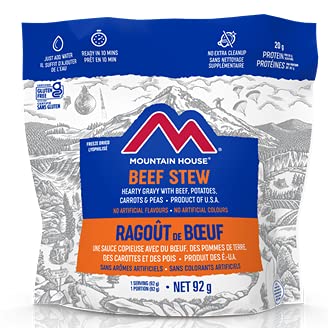
Freeze-dried meals
The opposite of ration bars: a real hot meal, but one that needs boiling water. It's the complement that makes a reserve bearable by day 3, when morale counts for more than calories. Shelf life of 25 to 30 years, and you eat straight out of the pouch.
$23.95 View on Amazon
Folding solid-fuel stove
The little brother of the tabletop stove: it folds flat, burns tablets or twigs, and depends on no canister you have to buy again. Slower — about 10 minutes for 500 ml — but it doesn't freeze, doesn't leak and doesn't go flat after 6 months in a drawer. Outdoor use only.
$8.29 View on Amazon
Solid fuel tablets
15 grams, about 10 minutes of clean flame, no black smoke. They feed the folding stove, but their second use may be the better one: they light even when damp and burn long enough to catch wet wood. Store them in a sealed bag — the smell gets into food.
$16.88−12 %$14.88 View on Amazon
3. Energy
4 items
3. Energy
Lighting, charging, heat or cooling: enough to get through comfortably when the grid gives out.

Build your solar system →
Have the panels but not the rest? A full page covers it: charge controllers, batteries, inverters and protection, organized by your system voltage — 12 V, 24 V or 48 V — with a table to help you choose.
See the solar page
EcoFlow DELTA 3 — 1,024 Wh, 1,800 W
The solution that settles the most dangerous problem in an outage: it can be used indoors with no risk of carbon monoxide whatsoever, unlike a generator. Silent, it powers the fridge, phones, lighting, a pump or a medical device, and recharges fully in 43 minutes. One nuance about power: 1,800 W continuous, and up to 2,600 W with X-Boost — but X-Boost is for resistive loads, a kettle or a toaster, not a compressor’s inrush at startup. For a fridge, go by the 1,800 W. Its limitation, said plainly: its capacity is finite. With no way to refill it, it is inert by day 4 — which is exactly why the solar extension below matters as much as it does.
$849.00−35 %$549.00 View on Amazon
Folding USB solar panel
As long as there's sun, your phones, headlamps and power banks will never go flat — even after a week without power. It folds like a document case and clips onto a bag.
Worth noting: its outputs are USB, so it powers small devices. To recharge a power station, you need a more powerful panel with a DC output.
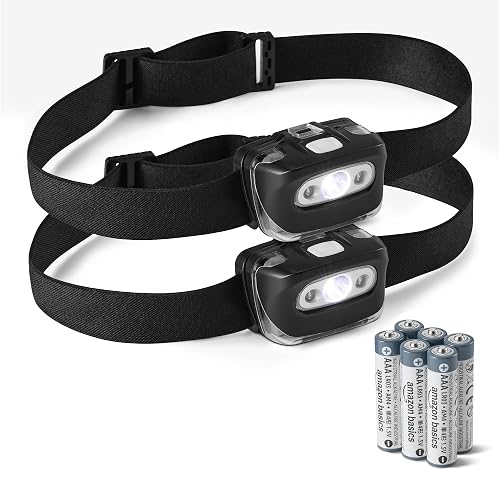
Headlamps — multi-pack
If you were only going to buy one thing, this would be it. One per person, children included. Having your hands free changes absolutely everything: cooking, changing a diaper, fixing something, going down to the basement. A flashlight takes up one hand; a headlamp gives you both back. The multi-pack settles the question for the whole household at once.
$19.00 View on Amazon
Anker power bank
The bare minimum, and the cheapest item on the whole list. A charged phone means the Hydro outage map, weather alerts, and a way to tell your family you're all right. Keep it in the kit and recharge it twice a year, at the time changes — that's the only maintenance it needs.
$199.99−35 %$129.99 View on Amazon
4. Communication
4 items
4. Communication
Staying informed and reachable, even if the cellular network goes down.

Midland ER310 — emergency radio
3 ways to power it: hand crank, solar panel or batteries. It picks up automatic weather alerts, so it wakes you if a warning is issued overnight. It also works as a flashlight and can put a little charge back into a phone. It's the device that keeps working when everything else is dead.
$140.81 View on Amazon
Motorola T470 — licence-free radios
Communication that depends on no network: when the cell towers go down, these still work. And unlike programmable radios, these require no certificate — they are Family Radio Service units, licence-exempt in Canada. Weatherproof, and they pick up weather alerts. About the advertised range: manufacturers quote kilometres measured mountaintop to mountaintop. In wooded terrain, count on one to 2 kilometres — plenty to stay in touch around a house, a property, or between 2 vehicles travelling together.
$138.91−9 %$127.00 View on Amazon
Rechargeable batteries and charger
They close the self-sufficiency loop: with the solar panel or the power station, you recharge your batteries indefinitely instead of running down a supply that doesn't renew itself. Choose a low self-discharge model — it holds its charge for years in a drawer, which is exactly what you want from an emergency kit.
$58.77 View on Amazon
Battery organizer with tester
Nothing is more frustrating than perfect equipment with dead batteries — and nothing takes longer than rummaging through 3 drawers in the dark. Everything is stored in one place, by size, and the built-in tester tells you which ones are still good. It's the accessory that makes the time-change check genuinely quick: you test, you replace what's weak, and it's done in 5 minutes.
$24.41 View on Amazon
5. Warmth and shelter
4 items
5. Warmth and shelter
8 months a year in Quebec, hypothermia acts faster than thirst or hunger. It's the category people underestimate most.

Reflective emergency bivy
The sack version, not the blanket: it reflects heat back over the whole body and blocks the wind, whereas a blanket slips off the moment you move. The material resists tearing, unlike thin mylar that punctures the first night. One per person, plus one to insulate you from the ground.
$27.99 View on Amazon
Reflective poncho
It covers the person and their pack, and its reflective lining also makes it a survival blanket once wrapped around you. 2 functions in one item — rare when every gram counts. Note: no corner grommets, so this isn't a poncho you string up as a shelter between 2 trees.
$11.37 View on Amazon
Insulated work gloves
Leather with an insulating liner: they hold the heat while still letting you handle sheet metal, broken glass or a frozen branch. That's what sets them apart from winter mitts, warm but useless the moment you have to work. Try them on with your coat: too tight, they cut off circulation and chill you.
$29.14 View on Amazon
Stormproof matches
They burn in wind and rain, and relight themselves after being dunked in water. Gram for gram it's the most reliable fire insurance there is — a lighter freezes or runs empty. The waterproof case and spare strikers matter as much as the matches: the original striker is the first thing to get soaked.
$33.71 View on Amazon
Waterproof tinder wicks
The complement to matches, not their replacement. Tinder makes no spark of its own: it turns a spark into fire. That is exactly the problem when the wood is damp and the wind is up. The model shown here pairs 3 paraffin-wax hemp wicks with an aluminium bellow tube: you fray the end of the wick, one spark is enough to catch it, and the tube then lets you blow on the ember without putting your face in the smoke. Each wick burns up to an hour according to the maker, and cuts to whatever length you need — a thin shaving for a quick start, a thicker piece to keep going. It lights from a spark alone: ferrocerium, flint, or even a spent lighter with nothing left but the wheel. Waterproof, it works wet. Over 2 000 reviews: it is the most proven tinder on this page.
$20.00 View on Amazon
6. First aid
2 items
6. First aid
It isn't dramatic injuries that cause trouble, but the ones that stop you walking or that get infected.

Trauma kit with tourniquet
This isn't an ordinary first aid kit. Its difference comes down to one object: the tourniquet, which separates a kit that can treat a hemorrhage from one that can treat a scratch. Tourniquets sold individually on marketplaces are widely counterfeited — hence the value of a serious brand. A tourniquet is only worth having if you know how to use one, though: a day of first aid training pays off more than any purchase on this page.
$49.41 View on Amazon
N95 masks — Dräger X-plore 1750
Their most likely use in Quebec isn't medical: it's wildfire smoke, which made the air hard to breathe several summers in a row, and dust after damage. This one carries genuine NIOSH certification, not a procedure mask, and is held by 2 straps behind the head rather than ear loops — that is what creates the seal. It folds flat, so it won't get crushed at the bottom of a drawer over 2 years. Box of 20.
$36.80 View on Amazon
Potassium iodide (KI)
The item you hope never to open. In the event of a radioactive iodine release, potassium iodide saturates the thyroid and stops it from taking up radioactive iodine that has been breathed in or swallowed. That is its only function: it protects against no other form of radiation, and it replaces neither sheltering in place nor evacuation. To be taken only on the instruction of public health authorities — the dose depends on age, and taking it needlessly is not harmless, particularly with an iodine allergy or a thyroid disorder. The model shown here is 65 mg per tablet, in a bottle of 60. Its shelf life is measured in years: the kind of purchase you make once and forget at the back of a cupboard. Let's be honest about the risk in Quebec: Gentilly-2 has been shut down since 2012, and the nearest operating reactors are in Ontario and New Brunswick. The probability is low. That is why I place it at the end of the list rather than among the priorities.
$38.79 View on Amazon
7. Carrying and organizing
4 items
7. Carrying and organizing
The container decides everything else: too small and you leave the essentials behind; too big and you can no longer carry it.

50 L hiking backpack
The size that holds 3 days of self-sufficiency without turning into a move. The criterion that comes first is the padded hip belt: it's what transfers the weight onto your hips, and what makes the difference after an hour of walking. Rain cover included, which saves another purchase.
$47.99 View on Amazon
Convertible 60 L carry-on
For evacuating by vehicle, where it's no longer about carrying comfort but volume and quick access. It opens flat like a suitcase, converts into a duffle, and fits as carry-on baggage. No hip belt, though: this isn't the one you carry on foot for an hour.
$95.00 View on Amazon
Roll-top dry bags
3 or 4 bags in different colours and a pack's contents stop being a jumble: one for clothing, one for food, one for electronics. You find what you're after without emptying everything on the ground, and nothing gets wet. A roll-top closure holds better than a zipper.
$19.99 View on Amazon
Waterproof document pouches
After a disaster come the formalities: the insurance claim, temporary housing, replacing identity documents. The people who come through best are those who had their papers with them. These are transparent — you read without taking documents out, and the touchscreen works through the plastic. Watch the size: a letter sheet fits folded in half, not flat.
$15.18 View on Amazon
8. Tools and hygiene
5 items
8. Tools and hygiene
What makes the hard days bearable, and what lets you repair whatever breaks along the way.

Multi-tool with pliers
One tool only, but a good one. The pliers shut a water or gas valve, the small serrated blade gets through a rope or a strap, and the wire cutter through a fence. Buy a brand that guarantees its tool for 25 years rather than 3 successive copies: this is an object you hand down, not one you replace.
$94.95 View on Amazon
Compact duct tape
9 metres in a case the size of a pebble, with a shell that keeps the tape from sticking to itself. It repairs a tear, a separated sole, a tent pole, and immobilizes an ankle in a pinch. Check it once a year: cheap tape adhesive dries out after 2 winters somewhere unheated.
$6.99−17 %$5.77 View on Amazon
550 paracord with utility strands
It rigs a shelter, replaces a bootlace, hangs food out of reach of animals, ties a load to a car roof. This one goes further than ordinary paracord: alongside the 7 nylon strands it carries fishing line, waxed fire-starter tinder and utility wire, braided inside. 3 more tools, without a gram more.
$71.22−11 %$63.68 View on Amazon
Pealess emergency whistle
It carries a kilometre and doesn't wear out your voice, which gives out after a few minutes of shouting. The pealess model is the only one that holds up in winter: a pea freezes and the whistle goes silent. Plastic rather than metal — metal sticks to your lips in deep cold. The cheapest and most useful item in the whole shop.
$21.00 View on Amazon
Personal hygiene kits
The category people cut first because it looks trivial, and the one that most changes the mood of a third day without running water. 6 complete kits: toothbrush, toothpaste, floss, soap, comb. You'll still want to add wet wipes, compressed toilet paper and contractor-grade garbage bags.
$30.89 View on Amazon
Compact 7×25 binoculars
Seeing at a distance saves you from going out. The level of a waterway, the state of a road, smoke on the horizon: all things you judge better from your window than by driving there. The model shown here is a compact 7×25. The 7× magnification is a choice, not an economy: at 10× and beyond the image shakes in the hand as soon as you have nothing to brace against, and you spend more time searching than looking. The 25 mm objectives keep the bulk of a pair of sunglasses. Its limitation, and it is a real one: a small objective gathers little light. At dusk the image darkens quickly. For daytime observation it is more than enough — for night, it is not the tool.
$20.56 View on AmazonNot sure where to start?
That's exactly what the free assessment is for: in 30 minutes, I tell you what's missing in your home — and what would be of no use to you.
Book my free assessment